
We set off up Holford Combe, crossing the stream several times.
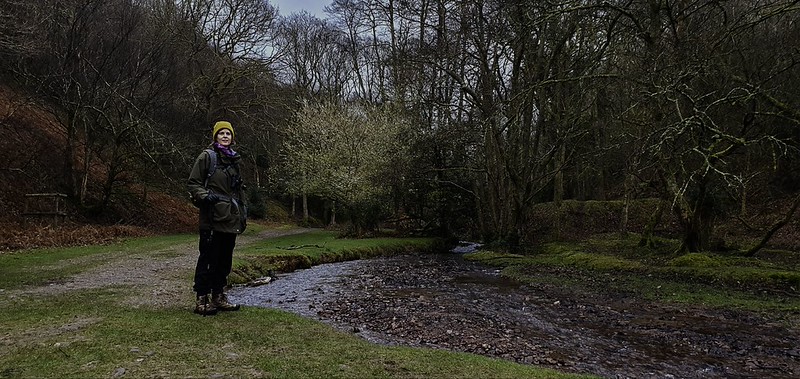

At the top of the combe we climbed up to Dowsborough Fort. The woods were damp. Birds were singing. Oak trees were packed together, trunks cork-screwing up towards the daylight.

According to local oddball folklorist and song “collector” Ruth Tongue, Dowsborough was a lookout camp that was taken over by Danish invaders. The Danes pillaged local villages, stealing their women. One fateful day, though, the women turned on the Danes and attacked them while they were feasting. There was a great massacre. The only survivor was a small Danish boy. Today, apparently, at Dowsborough Fort you can still hear the sounds of the feast and the massacre and the plaintive lonely song of the Danish boy.
We didn’t see or hear any ghosts.

We walked through the woods a bit more, then down through some fields to Nether Stowey.


We went up to Nether Stowey Castle.

We had lunch in the Ancient Mariner pub, opposite a house where Samuel Taylor Coleridge had lived. Pint of Jail Ale, baguette with cheese and onion and chips, nothing special.

Back across fields and down quiet lanes. We saw some Red Deer, lots of Redwings.

Stopped at the Plough in Holford for a pint/coffee, and then as it was only 3:15pm we walked a bit further up into Holford Keating nature reserve, the path following the river high up the side of its steep-sided wooded valley.
Then back to the hotel. We finally got a bit damp, having escaped the forecasted showers for most of the day.
